Ghana’s large mines spent US$4.2 billion on local procurement in 2025. For mining suppliers in Ghana, that spend comes with rules: a list of 51 goods and services that must be bought in the country, work reserved for Ghanaian companies, and registration with the Minerals Commission. This hub sets out what the sector buys, who may supply it and how to reach the buyers.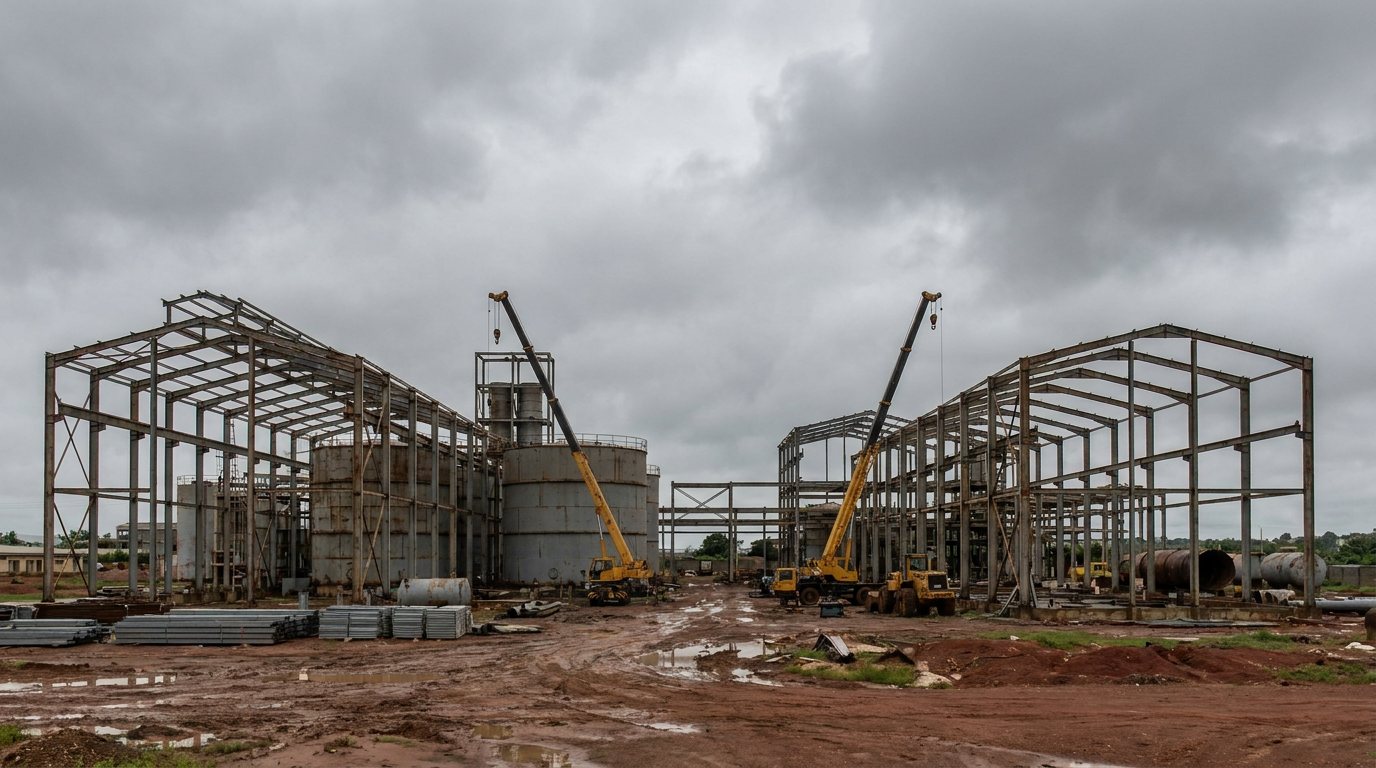
Mining suppliers in Ghana: what the gold sector buys and who can supply it
Key facts
- The law: the Minerals and Mining (Local Content and Local Participation) Regulations, 2020 (L.I. 2431) apply to mineral right holders, licensed gold dealers and registered mine support service providers.
- The list: the Minerals Commission’s local procurement list names the goods and services that must be bought in Ghana. The sixth edition, with 51 items, has applied since 1 January 2025, and the Commission reviews the list every year.
- Who wins the bid: for listed items, mining companies must choose the bid with the most Ghanaian ownership, management and employment.
- Reserved work: contract mining for small-scale mines, haulage, fuel supply, security and catering are for Ghanaian companies. Technical and engineering services go to Ghanaian-owned firms, and a foreign-owned company incorporated in Ghana can take part in collaboration with one.
- Money and paperwork: mining companies bank with institutions incorporated in Ghana, insure through insurers licensed by the National Insurance Commission, and use lawyers and accountants licensed in Ghana.
What the gold chain buys from mining suppliers in Ghana
Click each stage to see who buys, what is in demand and the rule that applies.
Exploration
Who buys: Holders of reconnaissance and prospecting licences looking for and defining a deposit.
In demand: Drilling, geophysical surveys, assay laboratories, core trays and sample bags. Drilling and geophysical surveys are on the local procurement list.
Mine building
Who buys: Mining lease holders developing a new mine or expanding one.
In demand: Civil works, plant installation, steel fabrication and tailings storage facilities, all on the local procurement list.
Operations
Who buys: Operating mines and their mining contractors.
In demand: Contract mining, emulsion explosives, fuel, lubricants, grinding media, catering, security and on-site medical services. Contract mining for small-scale mines and haulage are reserved for Ghanaian companies.
Processing and assay
Who buys: Mine processing plants, GoldBod and its licensed buyers, and refineries.
In demand: Assaying, activated carbon, crucibles, cupels and water treatment. Since 1 September 2026, doré bought under approved off-take must be refined at a GoldBod-approved refinery in Ghana.
Transport and export
Who buys: Mines, GoldBod and exporters moving gold and supplies.
In demand: Gold haulage, bullion boxes, freight forwarding, warehousing and security, all on the local procurement list.
Finance, insurance and law
Who buys: Every mineral right holder and licensed gold dealer.
In demand: Banks incorporated in Ghana, with at least 20% of financial transactions through Ghanaian-owned institutions; insurance through insurers licensed by the National Insurance Commission; lawyers and accountants licensed in Ghana.
Local procurement list: Minerals Commission, sixth edition, 51 items, in force since 1 January 2025, under the Minerals and Mining (Local Content and Local Participation) Regulations, 2020 (L.I. 2431).
How to become a mining supplier in Ghana
Selling into Ghana’s mines is a process, not a single licence. These are the usual steps, in order.
- Incorporate in Ghana. Mine support service registration is open to companies incorporated in Ghana, so a foreign supplier first sets up a local company or partners with one.
- Register with the Minerals Commission. Companies that provide mine support services to mineral right holders register under the Minerals and Mining (Support Services) Regulations, 2012 (L.I. 2174). The registration lasts a year and is then renewed.
- Check the procurement list. If your product or service is on the list, mines must buy it in Ghana and favour the bid with the most Ghanaian participation. Price your offer, and build your team, with that in mind.
- Partner where the law requires it. For technical and engineering work, a foreign-owned company works in collaboration with a Ghanaian-owned firm.
- Get onto buyers’ vendor lists. Finally, each mine buys through its own supplier registration and tenders, so register with every buyer you want to serve.
Guides for mining suppliers in Ghana
The rules and the chain you are selling into, in reading order.
- 01Investor KnowledgebaseGhana’s Gold Value Chain, Explained: From Pit to Refinery2 min read · Updated
- 02GoldBod & RegulationGhana’s Mineral Rights, Explained: Licences, Leases and Who Can Hold Them1 min read · Updated
- 03GoldBod & RegulationWhat the Gold Board Act, 2025 Means for Buyers, Aggregators and Exporters2 min read · Updated
- 04Ghana–InternationalSince 1 September, Ghana’s Small-Scale Gold Must Be Refined Locally Before Export1 min read · Updated
- 05Buying, Trading & ExportHow to Read a Gold Assay Certificate2 min read · Updated
- 06Due Diligence & RiskVerify Before You Wire: How Buyers Tell a Real Ghana Gold Deal From a Fake One3 min read · Updated
On the Ghana Gold Map
Large-scale mines and Ghana's refineries, the main buyers of goods and services, from our interactive Ghana Gold Map.
Questions mining suppliers in Ghana ask
What is the local procurement list?
It is the Minerals Commission’s list of goods and services that mining companies must buy in Ghana, published under L.I. 2431. The sixth edition has 51 items, from explosives, fuel and grinding media to assaying, security, catering, legal and insurance services, and it has applied since 1 January 2025. The Commission reviews it every year, so check the current edition on its website.
Do I need to register with the Minerals Commission to supply a mine?
Companies providing mine support services, such as contract mining, drilling, assay laboratories or equipment supply, to mineral right holders register with the Minerals Commission under L.I. 2174. The registration is renewed every year. However, confirm the requirement for your specific service with the Commission or a Ghanaian lawyer.
Can a foreign company supply Ghana’s gold mines?
Yes, for many goods and services. However, some work is reserved for Ghanaian companies, including contract mining for small-scale mines, haulage, fuel supply, security and catering. For technical and engineering services, a foreign-owned company incorporated in Ghana can take part in collaboration with a Ghanaian-owned firm.
Which banks, insurers and lawyers must mines use?
Mining companies use financial institutions incorporated in Ghana, and at least 20% of their financial transactions must go through Ghanaian-owned institutions. They insure through insurers licensed by the National Insurance Commission and use lawyers and accountants licensed in Ghana. As a result, these are sizeable markets for Ghanaian firms.
Can The Ghana Gold introduce us to mines and buyers?
Yes. If you are one of the mining suppliers in Ghana, or want to become one, speak to a specialist and we will arrange introductions to licensed mines, contractors and GoldBod-licensed operators. We do not sell contracts or guarantee work.
Want to supply Ghana's gold sector?
Tell us what you supply and where you want to sell it. A specialist will call you back about introductions, market entry or research.
Prefer to message? WhatsApp our team.
This page is for information only and is not legal, tax or investment advice. The Ghana Gold arranges introductions and independent checks: we hold no client funds, do not buy, sell or broker physical gold, and promise no returns. Rules and figures change, so confirm the current position with the Minerals Commission or a qualified adviser before acting. See our Disclosure Policy.